In the rapidly evolving text-to-audio landscape, Suno has long held the title of the household name. But for creators who demand exacting control over lyrical rhythm, rhyme schemes, and syllable placement, Sonauto has quickly emerged as one of the most compelling contenders in 2026.
While Suno prioritizes catchy instant hooks and accessible one-click prompts, Sonauto targets the frustration that every AI lyricist eventually faces: the machine mispronouncing words, rushing through punchlines, or cramming ten syllables into a two-beat bar. Below is our direct, hands-on comparison of Suno vs Sonauto to help you choose the right engine for your songwriting workflow.
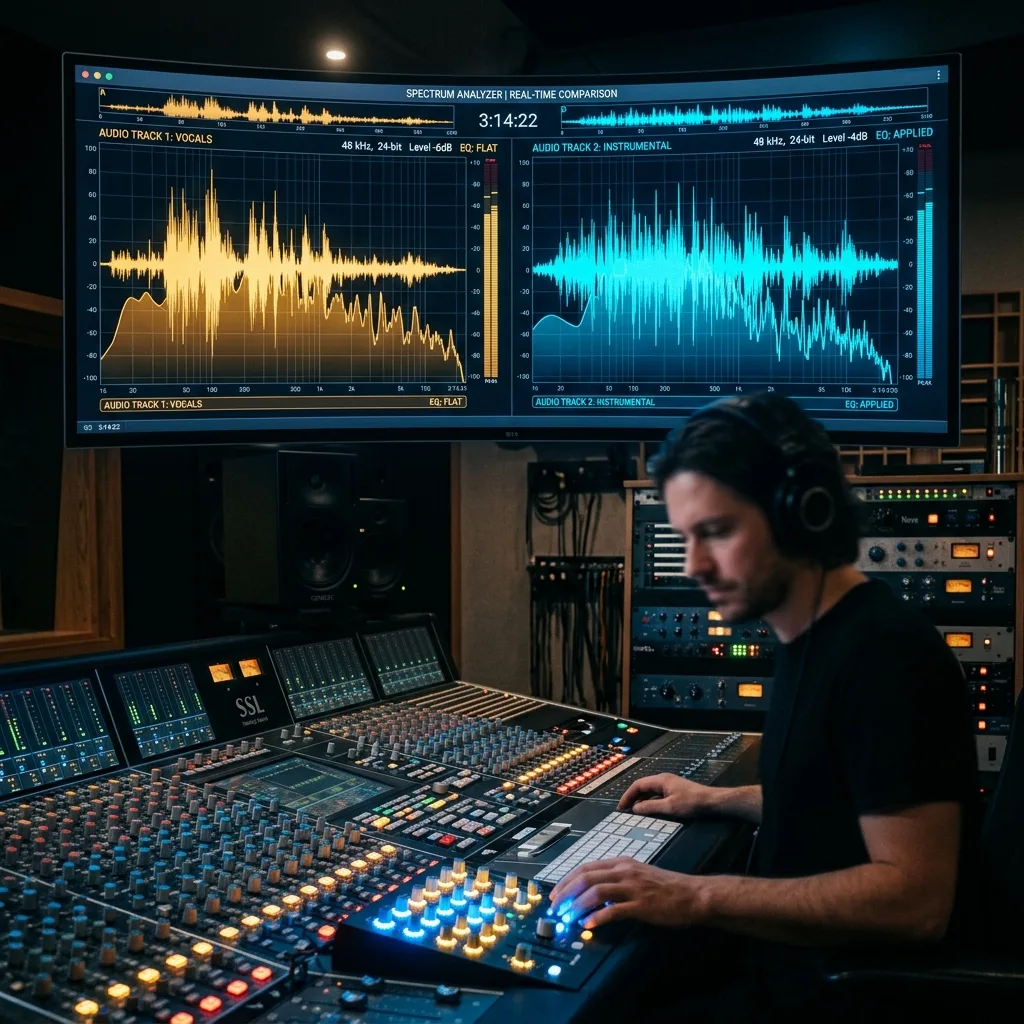
Analyzing harmonic clarity, lyrical timing control, and rendering latency between Suno and Sonauto.
Head-to-Head Comparison: Suno vs Sonauto
| Evaluation Dimension | Suno (V4) | Sonauto | Category Winner |
|---|---|---|---|
| Vocal Realism & Tone | Lush, radio-style pop & EDM vocals; occasional metallic artifacts at high registers | Clean, intelligible delivery; slightly drier vocal presence | Suno (Hook Appeal) |
| Lyrical Rhythm & Cadence | Black-box timing; frequently rushes verses or drops words | Explicit syllable control; respects meter and syncopation cleanly | Sonauto (By a Mile) |
| Genre Versatility | Vast training breadth (K-pop, metal, gospel, funk, trap) | Strong in hip-hop, R&B, and pop; narrower acoustic range | Suno |
| Generation Speed | 15–30 seconds for two 2-minute clips | 20–45 seconds depending on rhythm settings | Suno |
| Commercial Rights | Locked strictly to $10/mo and $30/mo paid tiers | Commercial rights available on subscription plans | Tie |
Round 1: Vocal Tone, Sibilance, and Emotive Delivery
When you prompt Suno for a mainstream genre—such as stadium pop, 90s alternative rock, or modern country—its vocal model delivers remarkable emotional energy. Vocalists belt, whisper, and introduce realistic vocal runs. However, in dense arrangements featuring heavy distortion or loud synth leads, Suno's vocals can suffer from phase smearing, making lyrics sound like they were recorded underwater.
Sonauto approaches vocal rendering with a drier, more direct mix profile. While its raw singing timbre can sound less polished out of the box compared to Suno's hyper-saturated master, it retains crisp high-frequency sibilance without harsh clipping. For creators planning to drop the audio into a DAW for post-processing, Sonauto’s dry vocal stems are often easier to EQ and compress.
Round 2: Lyrical Cadence, Meter, and Rhyme Control
This is where Sonauto proves its value. Every experienced Suno user knows the agony of writing a brilliant, rhythmic 16-bar verse only to have Suno compress the first four lines into three seconds and stretch the remaining lines into an awkward drone. Suno simply treats lyrics as broad semantic guidance rather than strict sheet music.
Sonauto was engineered specifically to solve this problem. Its editor allows you to designate rhyming pairs, control tempo accents, and map syllables against beats. If you write rapid-fire hip-hop verses or syncopated musical theater lines, Sonauto follows your metric structure with surgical accuracy.
Round 3: Song Structure and Arrangement Versatility
Suno remains superior when it comes to understanding macro song architecture through meta tags. Inserting brackets like [Intro], [Verse 1], [Pre-Chorus], [Anthemic Chorus], and [Guitar Solo Outro] generally guides Suno to build dynamic tension and release.
Sonauto handles verse-chorus transitions reliably, but it can occasionally feel more formulaic across extended tracks. For producers who want total freedom to arrange modular sections, exploring dedicated Suno alternatives like Udio or AISongGenie provides greater structural flexibility.
Round 4: Pricing, Daily Caps, and Value
Both platforms follow subscription models with free entry tiers:
- Suno: 50 daily credits on free (5 generations). Pro plan costs $10/month (2,500 credits), and Premier costs $30/month (10,000 credits). Free generations cannot be monetized commercially.
- Sonauto: Offers free daily generation points with paid tiers starting around $12/month. Its community-driven model provides generous playground exploration, though commercial export requires an active plan.
The Third Alternative: Why Creators Choose AISongGenie
If you love Suno’s melodic catchiness but despise its muddy compression—and simultaneously appreciate Sonauto’s lyrical clarity without wanting to micromanage syllable grids—AISongGenie represents the ideal middle ground.
AISongGenie incorporates automated studio mastering directly into its diffusion pipeline. You receive balanced, radio-ready mixes with crisp vocal separation and punchy low-end punch without needing a background in audio engineering. Test our hip-hop and trap preset below:
Try AISongGenie Free — Generate a Melodic Hip-Hop Track
Final Verdict: Which One Should You Pick?
Pick Suno if: You want instantaneous, viral pop and rock songs from a simple two-sentence prompt and care more about catchy vocal timbre than strict adherence to complex lyrics.
Pick Sonauto if: You write intricate, multisyllabic rap or precise poetry and need your AI engine to follow your exact meter and rhythm without dropping words.
Frequently Asked Questions
Is Sonauto better than Suno for rap and hip-hop?
Yes, for rap and hip-hop specifically. Sonauto's syllable-level cadence control and explicit meter mapping give it a decisive edge over Suno when generating lyrics with complex multisyllabic flow, rapid verses, or syncopated rhythms. Suno treats lyrics as loose semantic guidance and frequently drops words or rushes bars in high-density rap verses. If tight rhythmic precision is your primary requirement, Sonauto wins this category clearly.
Does Sonauto have a free plan?
Yes, Sonauto offers a free community tier with daily generation points that reset periodically. The free plan is suitable for experimentation with rhythm grids and cadence mapping but restricts commercial export. A paid subscription (starting around $12/month) is required to commercially publish or monetize generated tracks.
Can either Suno or Sonauto export isolated stems?
Suno does not offer native stem separation on its standard plans. Sonauto provides limited stem output on some subscription tiers, but neither platform matches the stem export fidelity of Udio (which offers isolated vocal, bass, drum, and instrument stems on its Pro plan). If stem-level DAW integration is essential to your workflow, Udio is the stronger choice regardless of Suno vs Sonauto.
Which is better for beginners: Suno or Sonauto?
Suno is significantly more beginner-friendly. Its one-box prompt interface requires no knowledge of music theory, cadence, or syllable mapping. You simply type a description and receive two audio clips in 15 to 30 seconds. Sonauto's rhythm grid and lyrical control tools offer superior output for precise songwriting but have a steeper learning curve. Beginners should start with Suno or AISongGenie and graduate to Sonauto once they understand beat structure and syllable counting.
Related Articles and In-Depth Reviews
Frequently Asked Questions
Can I commercially use songs generated with AISongGenie?
Yes. All tracks generated under paid subscriptions or eligible commercial licenses include full commercial rights. You can release your music on Spotify, Apple Music, YouTube, and monetize across podcasts, games, and video campaigns without copyright strikes.
What audio quality and export formats are supported?
AISongGenie delivers studio-mastered audio files in 320kbps MP3 and uncompressed WAV formats. Automated acoustic mastering guarantees balanced dynamic range, clear vocals, and punchy low-end frequencies across all playback systems.
How do I craft effective prompts for AI music generation?
Describe key musical dimensions in your prompt: genre, tempo or BPM, mood, instrumentation, and vocal style. You can also paste your own custom lyrics or let our built-in lyric generator craft structured verses and choruses automatically.